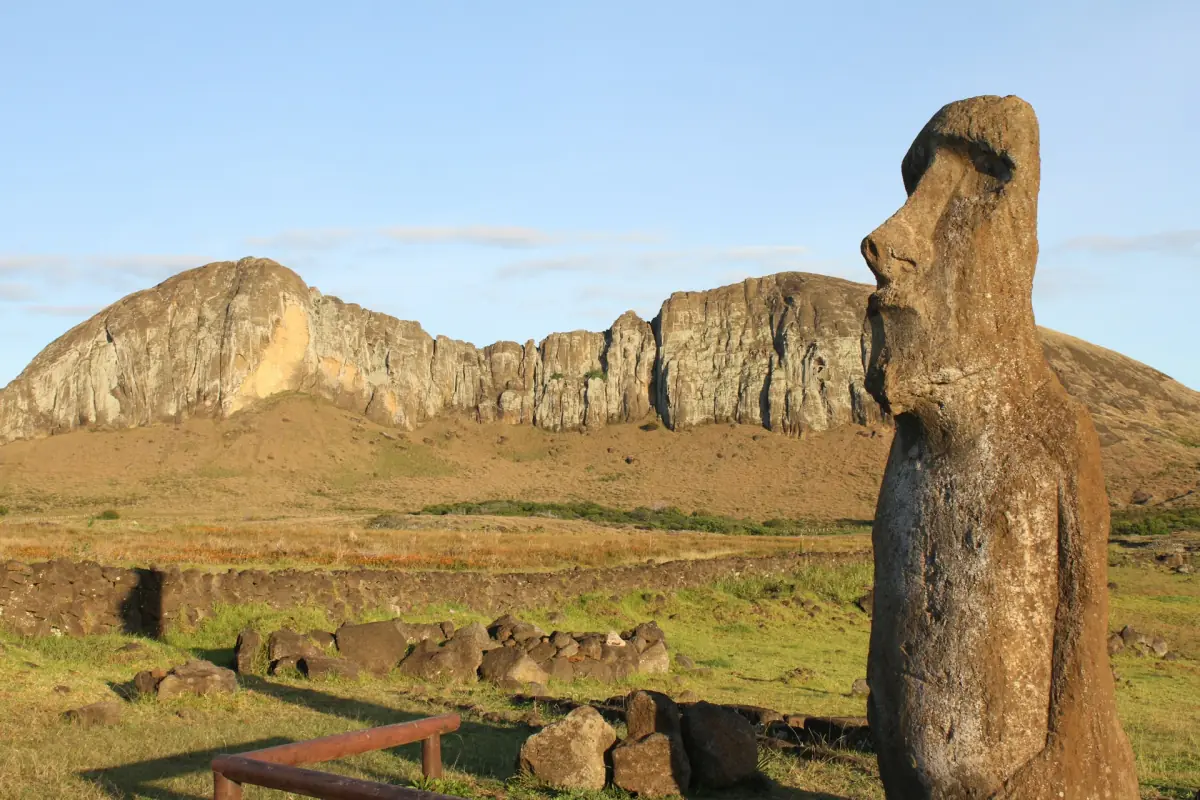
Understanding Easter Island history through its landscape
Easter Island history belongs to Rapa Nui, a Polynesian island in the Pacific that forms part of Chile. Its stone figures are one part of a cultural landscape that also includes quarries, settlement remains, agricultural features and funerary sites. Reading those places together gives a fuller picture than treating every stop as another statue photograph.
The moai represent ancestors, while ahu are ceremonial platforms. Those terms provide a useful starting point for an archaeology visit: the figure and the place supporting it have related but distinct meanings. A guided route can help connect individual monuments with the broader landscape. For the figures themselves and the practical differences between sites, continue to the moai visitor guide.


Explore island history
The private archaeology tour includes a professional guide and vehicle. Choose a two-day outing with a native guide or a Moai trail day with a local guide.
Hand-picked tours, booked through GetYourGuide and Viator. Prices are indicative starting prices in US dollars (as of November 2026). Tap a tour for live availability and the current price in your currency.

Private archaeology tour
- Professional guide
- Transportation in a private vehicle
Confirm your address and pickup time. Entrance fees extra.
Check availability →
Two-day Moai and nature tour
- Included transportation
- Native Guide
Confirm the meeting point and park ticket arrangements before booking.
Check availability →
Moai trail day tour
- Local guide
- Included transport
- Essential equipment
Pickup and drop-off are included; confirm the details and park ticket arrangements.
Check availability →Archaeology and cultural routes on Rapa Nui
Choose a private archaeology day with hotel transfer, a guided Moai Trail day or a two-day highlights programme with transport and a native guide.
Settlement, ancestors and the archaeological landscape
Begin with Polynesian settlement and the relationship between communities and their ancestors. The island's heritage includes both monumental stonework and evidence of everyday life. Quarries, settlements and agricultural remains belong in the same account as the ahu. There is more to understand than the finished figures alone, and the landscape rewards looking at how these different types of place relate.
At Rano Raraku, moai in different stages of manufacture bring the quarrying aspect into focus. At Ahu Tongariki, 15 re-erected moai stand on a ceremonial platform. These sites offer different ways into the subject: production at the quarry and the monument setting at the ahu. They need not become a rigid timeline or a single explanation for every figure.
Anakena adds another kind of historical account. The arrival of Hotu Matu’a there belongs to oral tradition. Keep that tradition distinct from an exact archaeological date. It is a way to engage with the island's cultural narratives while giving each kind of evidence its proper place.
Orongo and the historical Tangata Manu ceremony
Orongo is a ceremonial village beside the Rano Kau crater. Its stone buildings and petroglyphs belong to the history of the Make-Make cult and Tangata Manu ceremony. Participants obtained the first egg of the manutara from Motu Nui. This was a historical ceremonial practice; a visit today centres on the protected village and its setting.
The Orongo and Rano Kau guide explains the visit separately from the wider chronology. The distinction matters when planning: Orongo allows one visit per park ticket, and wind checks at the crater edge can affect access. Arrange an accredited guide and allow the current site conditions to shape the day.
European contact in 1722 and the agreement of 1888
European travel accounts from 1722 form part of the island's historical record. They describe contact with an inhabited island and belong alongside archaeology and the accounts of the Rapa Nui community. The museum's historical interpretation draws on these different perspectives, rather than reducing the past to an outsider's arrival.
The incorporation into Chile in 1888 is another historical turning point. Its context includes Policarpo Toro, Ariki Atamu Tekena and the Acuerdo de Voluntades. Understanding that event is part of understanding the island's relationship with Chile. Present-day visitor access is governed by current park requirements, covered on the national park page.
Rapa Nui remains a living culture. Hanga Roa has craft markets and the Santa Cruz church, whose imagery combines Christian and Rapa Nui elements. Include the contemporary community in the way the island is understood, alongside its archaeological places.
Choosing a history-focused excursion
The six-hour private archaeology route includes a professional guide, private vehicle and hotel pickup and drop-off; entrance fees, food and drinks are extra. The Moai Trail day lasts six to eight hours and includes a local guide, transport, pickup and drop-off and essential equipment. The two-day highlights programme includes transportation and a native guide. Choose by the time available and the amount of the stay to devote to archaeology.
At every protected site, remain on approved paths and leave stones and objects in place. Moai and ahu must not be touched or climbed. These rules keep a history excursion respectful of both the monuments and the community whose heritage they are.
Questions about Rapa Nui history
What do the moai represent?
The moai represent ancestors. The ahu are ceremonial platforms, part of a wider landscape that includes settlements, quarries and agricultural and funerary remains.
What happened at Orongo?
Orongo was linked to the Make-Make cult and Tangata Manu ceremony. Participants sought the first manutara egg from Motu Nui. Today the visit concerns the ceremonial village and its protected setting.
Does the history guide include a museum visit?
Plan around the archaeological sites. The museum is preparing for reopening; consult its current visitor information before adding it to an itinerary.