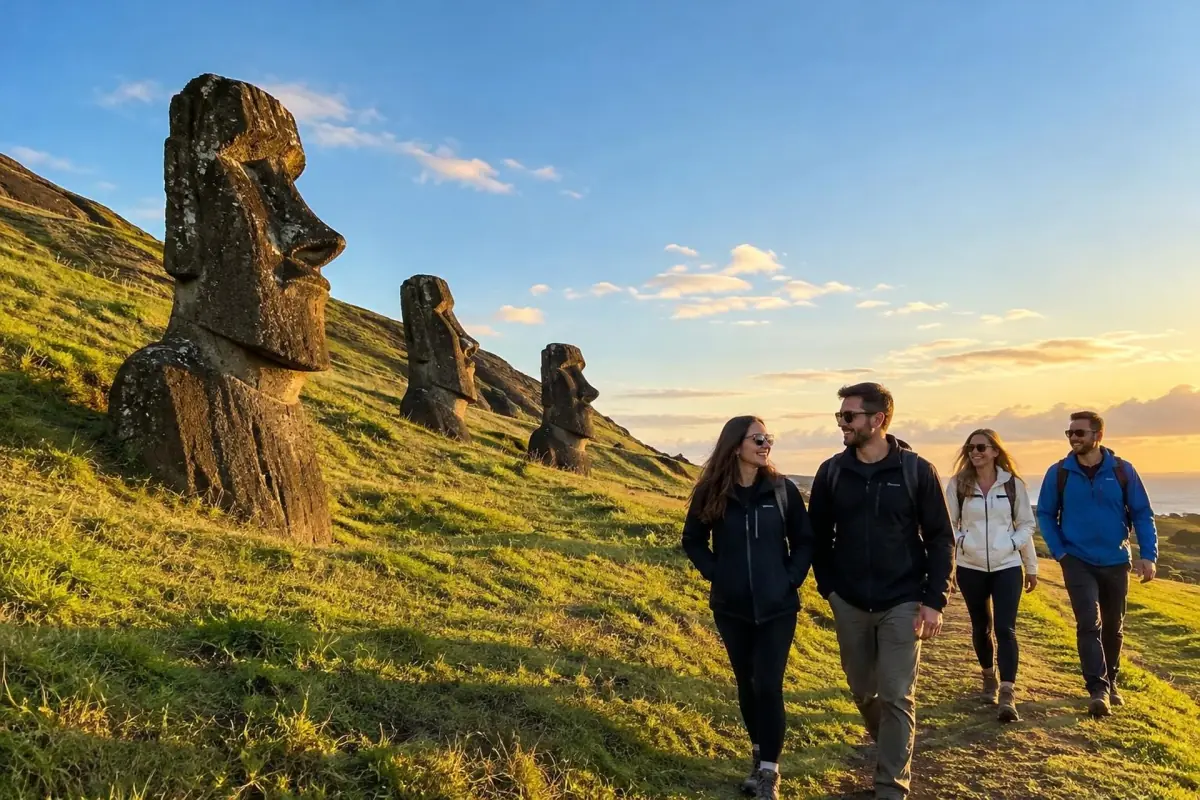
Rano Raraku and the making of the moai
Rano Raraku is the moai quarry on Rapa Nui, where figures in different stages of production help explain the island's monumental landscape. The statues represent ancestors, while the ahu are ceremonial platforms. Looking at the quarry alongside those platforms gives the visit a clear purpose: understanding the making of the figures as well as the settings where they became part of community life.
Approach the hillside as a protected archaeological place. The visitor route includes slopes and exposed sections, so footwear and sun protection matter as much as the camera. An accredited guide and a park ticket are separate requirements. Arrange both before setting out, then leave enough room in the day's programme to follow the permitted route without rushing between stops.
The moai guide explains the figures and platforms in more detail. For the wider cultural context, read about Easter Island history. At the quarry, concentrate on the differences between the figures and the landscape around them, rather than trying to attach an exact date to every statue.

Visit Rano Raraku
This island day combines Rano Raraku with a guide, hotel transfers and lunch.
Hand-picked tours, booked through Viator. Prices are indicative starting prices in US dollars (as of November 2026). Tap a tour for live availability and the current price in your currency.
A day route through the quarry and coast
The eight-hour Tongariki, Rano Raraku and Anakena outing combines a professional guide, return hotel transfer, lunch and travel by air-conditioned van. Arrange the park ticket separately.
Plan the single entry with an accredited guide
Ma’u Henua manages Rapa Nui National Park. Buy the ticket through the sales platform linked by the administration and engage a guide accredited by Ma’u Henua. The ticket has a ten-day validity period, but Rano Raraku and Orongo each allow one visit per ticket. Use the ticket conditions when placing these visits in the itinerary; a longer validity period is not a reason to split the quarry across separate entries.
For a guided day out, the route combining Tongariki, Rano Raraku and Anakena brings together a ceremonial platform, the quarry and the beach sector. Its eight-hour product duration covers the whole outing. Hotel pickup and drop-off, a professional guide, lunch and an air-conditioned van are included. Keep the park admission as a separate planning item. This option suits a day built around several places rather than an isolated transfer to the quarry.
Compare the practical requirements on the national park page. Before departure, look at the administration's daily access information and follow the guide's instructions on arrival. Rain, slippery or muddy paths and poor visibility can affect access. A planned visit should remain responsive to conditions on the day.
Paths, sun protection and archaeological care
Wear sturdy walking footwear and bring sufficient water and UV protection. The administration describes unprotected, sun-exposed passages as well as gradients. Consider those features when deciding whether the route suits everyone travelling together. Ask about the walking arrangements rather than assuming that transport by van makes the archaeological visit a level walk.
Stay on the authorised paths and respect every boundary. Do not touch the moai, climb monuments or take stones and natural materials away. Take photographs from within the visitor route. Keep the figures and their surroundings intact by observing from the permitted areas, including when stopping to hear the guide's explanation.
Fire and smoking are prohibited, and fire prevention is particularly relevant at the quarry. Camping, pets, alcohol and tobacco are prohibited in the park. Drones and commercial photography require permission. Plan ordinary photographs from the visitor path and arrange any specialised recording separately through the appropriate permission process.
For the coastal parts of the same excursion, read the guides to Ahu Tongariki and Anakena Beach. Their visiting conditions deserve their own preparation; reaching another stop does not change the protection rules at the quarry.
Questions about visiting Rano Raraku
Can the same park ticket be used for another quarry visit?
Rano Raraku allows one visit per park ticket. Plan the quarry as a single visit, even though the park ticket has a ten-day validity period.
Does the park ticket include a guide?
The ticket and an accredited guide are separate requirements. Organise the guide alongside the ticket, or choose a guided excursion and arrange park admission separately.
What should be carried for the paths?
Sturdy walking footwear, UV protection and sufficient drinking water are recommended for the slopes and exposed sections. Follow the authorised route and the current access instructions.
Does visiting the quarry permit a crater descent?
Keep to the authorised visitor paths and current boundaries. Plan the visit around the quarry route, with any access questions addressed to the accredited guide.