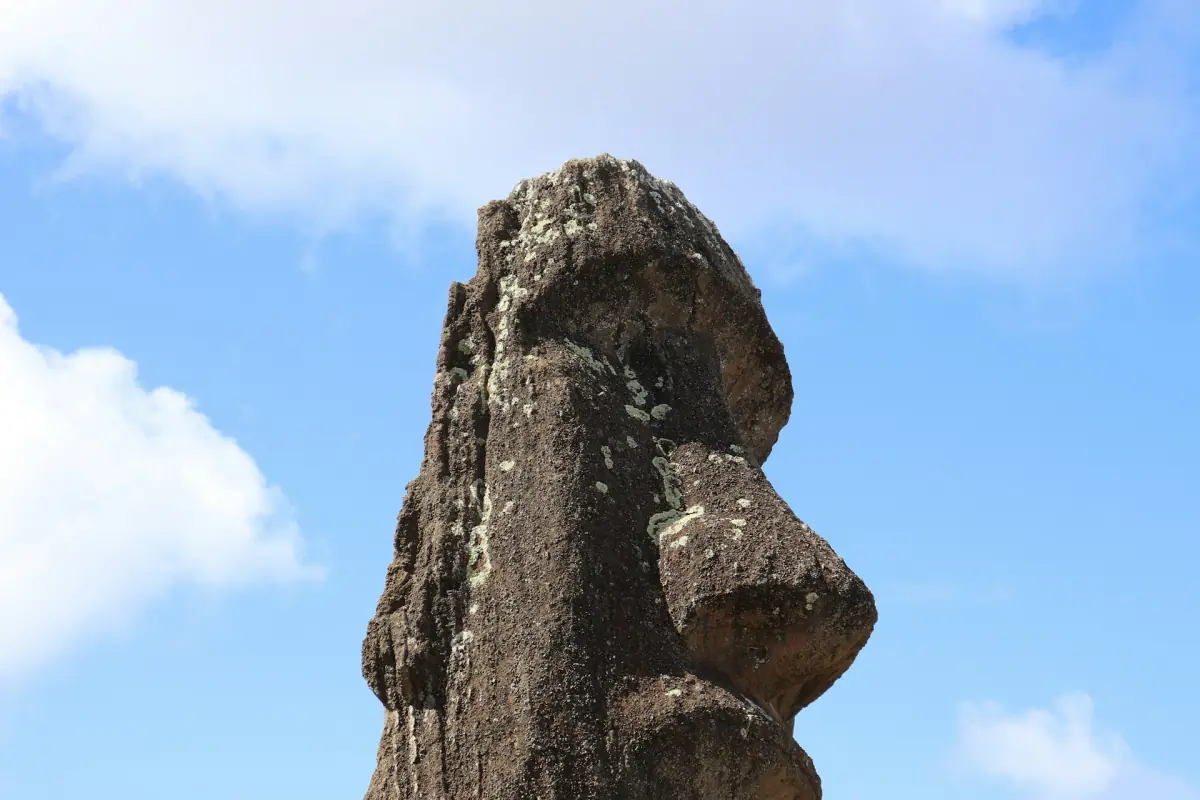
Seeing Easter Island moai in context
Easter Island moai represent ancestors. The stone figures belong to the cultural landscape of Rapa Nui, a Polynesian island in the Pacific that forms part of Chile. Understanding their meaning starts with distinguishing the figures from the ahu, the ceremonial platforms associated with them. A visit then becomes more than a search for a particular photograph.
The broader heritage includes quarries, settlement remains and agricultural and funerary features. Keep that surrounding landscape in view when choosing stops. This page focuses on the monuments and the practical choices involved in seeing them. For the chronology and the island's cultural development, use the separate history guide.
Figures, platforms and different settings
The quarry and the platform sites offer different ways of looking at moai. At Rano Raraku, figures in different stages of manufacture place the work of making them at the centre of the visit. On a ceremonial platform, attention shifts to the figures within the monument setting. Seeing both kinds of place helps give each stop a distinct purpose.
At Ahu Tongariki, the platform has 15 re-erected moai. The access is predominantly level, although wind can be strong. Carry water and sun protection, keep to the paths and leave the platform and figures untouched. Being able to see the monument clearly is a reason to use the designated viewing areas and respect their boundaries.
Choose the combination of places by interest rather than trying to make every stop identical. A quarry visit and a platform visit bring different aspects into focus, even when both concern the same ancestral figures.

A private Moai day
This private Moai tour includes hotel pickup and return.
Hand-picked tours, booked through GetYourGuide. Prices are indicative starting prices in US dollars (as of November 2026). Tap a tour for live availability and the current price in your currency.

A private day focused on moai
The seven-hour private Moai route includes hotel pickup and drop-off and an individual bottle of water; food and park admission are extra.
Anakena and the ceremonial platforms
Anakena adds a coastal setting to a monument itinerary. Ahu Nau Nau and Ature Huki are near the white coral-sand beach. Separate the beach visit from access to the protected platforms when planning the outing. Arrange the accredited guide for the archaeological places and follow the requirements for the particular area.
The arrival of Hotu Matu’a at Anakena is part of oral tradition. Treat it as a cultural account associated with the place while looking at the monuments in their landscape. The beach and figures can be appreciated together without merging all access rules or all kinds of historical evidence into one.
Leave sand, stones and other elements in place. The protection of a site includes its surroundings, so a coastal stop calls for the same care as a visit to an inland monument. Use the approved routes between viewing areas.
Ticket, accredited guide and the quarry visit
Ma’u Henua manages the national park. Buy the park ticket and arrange a guide accredited by Ma’u Henua as separate requirements. Use the official sales channel linked by the administration, and read the ticket conditions for the dates of the visit. The national park guide explains the practical arrangements in more detail.
Rano Raraku permits one visit per park ticket, so coordinate the quarry with the rest of the route before setting out. The site includes slopes and exposed, sunny sections. Sturdy walking footwear, water and UV protection are useful preparations for spending time on its approved paths.
For the seven-hour private Moai route, hotel transfers and an individual bottle of water are included. Food and park admission are extra. Arrange the required accredited guiding for the archaeological visits as part of the overall plan. Choose the route because its focus suits the day, and keep entrance arrangements distinct from the hotel transfer.
Looking closely while protecting the monuments
Moai and ahu must not be touched or climbed. Stay on marked paths, respect barriers and leave stones, objects and natural materials undisturbed. These rules protect the figures and the platforms as parts of the same cultural place. Plan photographs from the authorised viewing areas, without stepping beyond the route to change the angle.
Fire, smoking, alcohol, camping and pets are prohibited in the park. Drones and commercial photography require permission. Organise any such project with the administration before building it into a visit. A private excursion or rental vehicle still follows the park's protection and entry requirements.
Rapa Nui's culture continues in its present-day community. Give the monuments their ancestral context and approach the island with the same respect beyond the archaeological sites. For a wider plan combining monuments, town and coast, see things to do on Easter Island.
Questions about the moai
What is the difference between a moai and an ahu?
A moai is a figure representing an ancestor. An ahu is a ceremonial platform. Both belong to the wider archaeological landscape of Rapa Nui.
Why include Rano Raraku?
The quarry contains figures in different stages of manufacture. It adds the making of the moai to the platform settings seen elsewhere, with one visit allowed per park ticket.
Can visitors touch the figures for a photograph?
Keep hands off the moai and ahu and stay within approved paths and boundaries. Take photographs from the permitted viewing areas.