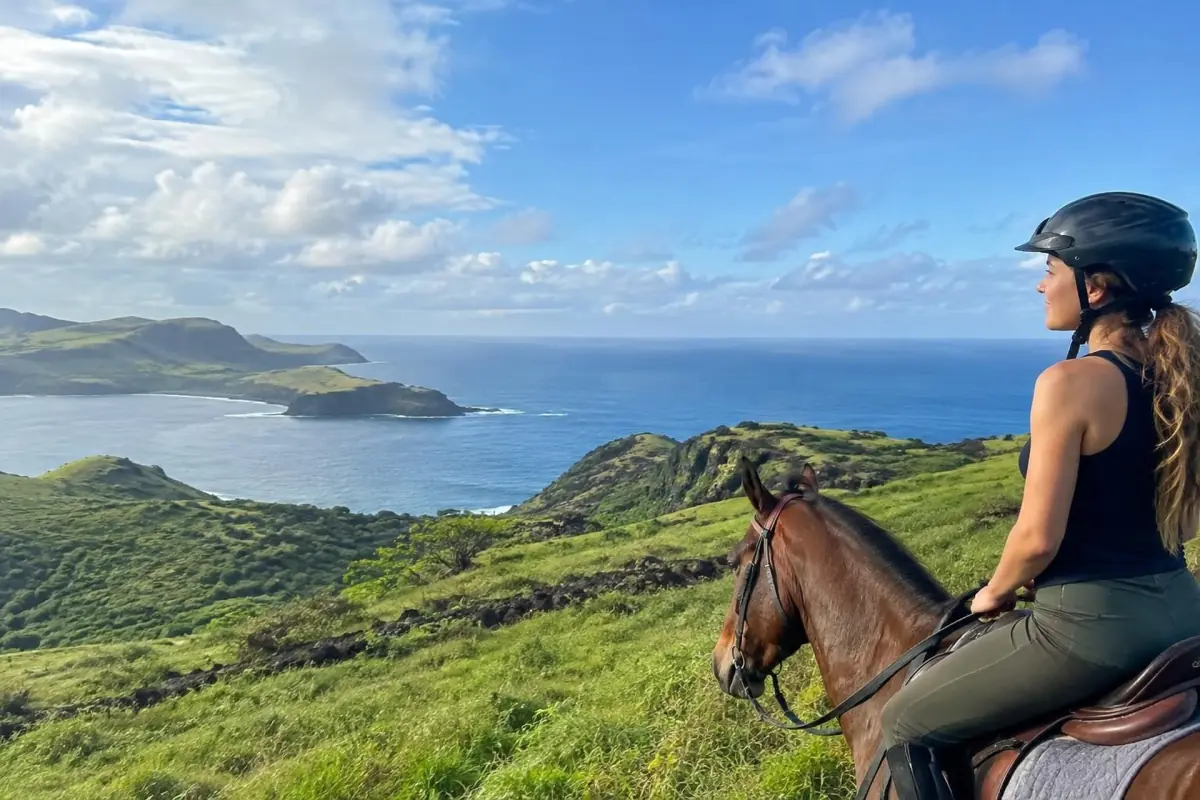
Choosing an Easter Island horseback riding outing
Easter Island horseback riding can be planned around a named Terevaka excursion, a three-hour ride with a Spanish-speaking guide or a golden-hour outing starting in VaiTea. The useful differences are the route focus, departure arrangements, language and equipment. Choose those features together rather than assuming every ride includes the same transfers and guidance.
A horse excursion also needs its own place in the itinerary. Compare the full programme length with your other commitments and discuss experience and participation requirements before booking. The island tour overview helps separate a riding activity from archaeological routes; seasonal planning provides context for choosing dates without promising conditions on the day.

Horseback rides
One ride includes hotel pickup and a trained horse; another has a Spanish-speaking local guide. The golden-hour ride meets in VaiTea.
Hand-picked tours, booked through GetYourGuide and Viator. Prices are indicative starting prices in US dollars (as of November 2026). Tap a tour for live availability and the current price in your currency.

Golden-hour horseback ride
- Safety equipment
- Air-conditioned vehicle
- Horseback riding guide
Confirm the time and participation requirements before booking; weather can affect the outing.
Check availability →
Island horseback ride
- Trained horse
- Riding equipment
Return to the hotel is included; confirm the pickup time and participation requirements before booking.
Check availability →
Horseback ride with local guide
- One horse per person
- Riding equipment
- Certified local guide in Spanish
Confirm the pickup zone, time and participation requirements before booking.
Check availability →Horseback excursions and golden-hour riding
The Terevaka option includes hotel transfers and riding equipment; compare it with a Spanish-guided ride from central hotels and a golden-hour outing meeting in VaiTea.
The Terevaka horse excursion
The two-and-a-half-hour Terevaka activity includes pickup and return to the hotel, a trained horse and riding equipment. Food is excluded. Its named Terevaka focus makes this the relevant option when that destination is the reason for choosing a ride. Arrange the hotel and pickup time for the reservation and keep the full activity duration available.
For comparison, consider what is actually supplied: the horse, equipment and hotel transfers form the package described here. If guiding or a particular language is central to the decision, resolve that detail with the booking team rather than taking it from a different ride. A named route should remain the basis of the plan, without adding independent detours to nearby monuments.
A three-hour ride with a Spanish-speaking guide
The three-hour ancestral ride includes a horse per person, riding equipment, a certified local guide in Spanish and transfer from central hotels. Food and drinks are excluded. The transfer zone matters: use the actual accommodation address when arranging collection rather than applying a central-hotel inclusion to every location on the island.
Language is a practical part of the choice because instructions need to be understood during the activity. This option explicitly includes Spanish guiding. Select it with that service in mind, and discuss any language needs before committing to the ride. Compare its three-hour programme with the two-and-a-half-hour options as complete activities, not as promised uninterrupted riding time.
The golden-hour ride from VaiTea
The golden-hour experience lasts two and a half hours and includes a horseback riding guide, safety equipment and an air-conditioned vehicle. Its meeting point is VaiTea, next to the old sheep plant. Plan around that departure rather than treating the included vehicle as a general hotel pickup service. Keep the specific meeting instructions with the reservation.
The golden-hour theme describes the outing's focus, while the actual light and weather depend on the day. Choose this format for its timed outdoor experience and guiding rather than a guaranteed sunset photograph. Clothing, personal equipment needs and suitability are useful questions for the activity team when discussing the ride.
Riding safety and participation
Before booking, explain riding experience and establish the current age, weight and health requirements for the chosen programme. Ask what equipment is supplied and how the ride is organised for the participants. Treat those answers as specific to the activity; a horse and equipment inclusion alone does not settle individual suitability.
Sernatur included equestrian activities among the safety requirements updated in 2026. Registration identifies an activity category, while the practical decision still concerns the chosen ride and the instructions given to its participants. Discuss horse handling and equipment with the team and follow the agreed route. A promotional photograph should not replace that conversation.
Keep welfare questions concrete when arranging the outing: ask how the horse is selected for the rider and how the ride is managed. Avoid choosing on the assumption of a certification or a universal standard inferred from an image. The relevant comparison here is between the stated programmes, equipment and guidance, alongside the information supplied for your participation.
Weather, route and protected places
Rain, wind, slippery or muddy paths and poor visibility can affect access decisions at island visitor sites. Follow the day's instructions and keep room to adjust other plans around the ride. An outdoor activity's title is not a weather forecast. Use the weather guide for climate context and the activity team for the current arrangement.
A riding route does not create extra permission to enter monuments or protected areas. Keep archaeological visits separate in the itinerary, follow released paths and respect site boundaries. If combining a ride with a park visit, read the national park requirements so transport and admission are organised as separate questions.
Horseback riding questions
Which option names Terevaka?
The two-and-a-half-hour Terevaka excursion includes hotel pickup and return, a trained horse and riding equipment.
Which ride includes a Spanish-speaking guide?
The three-hour ancestral ride includes a certified local guide in Spanish, a horse per person, equipment and transfer from central hotels.
Where does the golden-hour outing start?
The meeting point is VaiTea next to the old sheep plant. The programme includes a riding guide, safety equipment and an air-conditioned vehicle.
How should I check whether a ride suits me?
Discuss experience, age, weight, health and equipment requirements for that programme before booking. Follow the team's instructions and the agreed route.