Easter Island weather through the year
Easter Island weather is useful to understand at two different scales: the climate helps with choosing a month, while the forecast and local access decisions shape the day. The official Mataveri station normals show warmer air in the southern summer and rainfall in every month. Treat the monthly figures as climate context and keep plans adaptable for rain.
For a visit to the archaeological sites, plan around exposure as well as temperature. Rano Raraku has slopes and passages exposed to the sun, Orongo has uneven ground and strong wind, and Ahu Tongariki can also be windy. Comfortable air temperatures do not remove the need for water, sun protection or suitable footwear. Decide which sites matter most before committing the available days to fixed activities.

Monthly temperature and rainfall at Mataveri
The table uses the Dirección Meteorológica de Chile normal period 1991 to 2020. Max and Min mean the monthly averages of daily maximum and minimum air temperatures. They are not the hottest and coldest temperatures that can occur. Rainfall is the average monthly total, rather than the amount expected on any particular day. The normal columns were published in DMC monthly bulletins from 2025 and, for July, 2026.
February has the highest average daily maximum and the lowest average rainfall total in this series. July and August share the lowest average daily maximum. April has the highest average rainfall total. These comparisons describe a long reference period at one station. For the wider choice between seasons and activities, use the seasonal planning guide alongside the figures.
| Month | Max °C | Min °C | Rainfall mm |
|---|---|---|---|
| January | 26.9 | 20.0 | 81.3 |
| February | 27.5 | 20.6 | 69.3 |
| March | 26.9 | 20.2 | 86.9 |
| April | 25.5 | 19.4 | 123.0 |
| May | 23.4 | 17.7 | 116.9 |
| June | 21.9 | 16.7 | 109.2 |
| July | 21.2 | 15.9 | 113.1 |
| August | 21.2 | 15.7 | 97.1 |
| September | 21.6 | 15.7 | 97.3 |
| October | 22.5 | 16.2 | 90.9 |
| November | 23.8 | 17.5 | 75.2 |
| December | 25.5 | 18.7 | 69.6 |
Sunrise outing with rain equipment
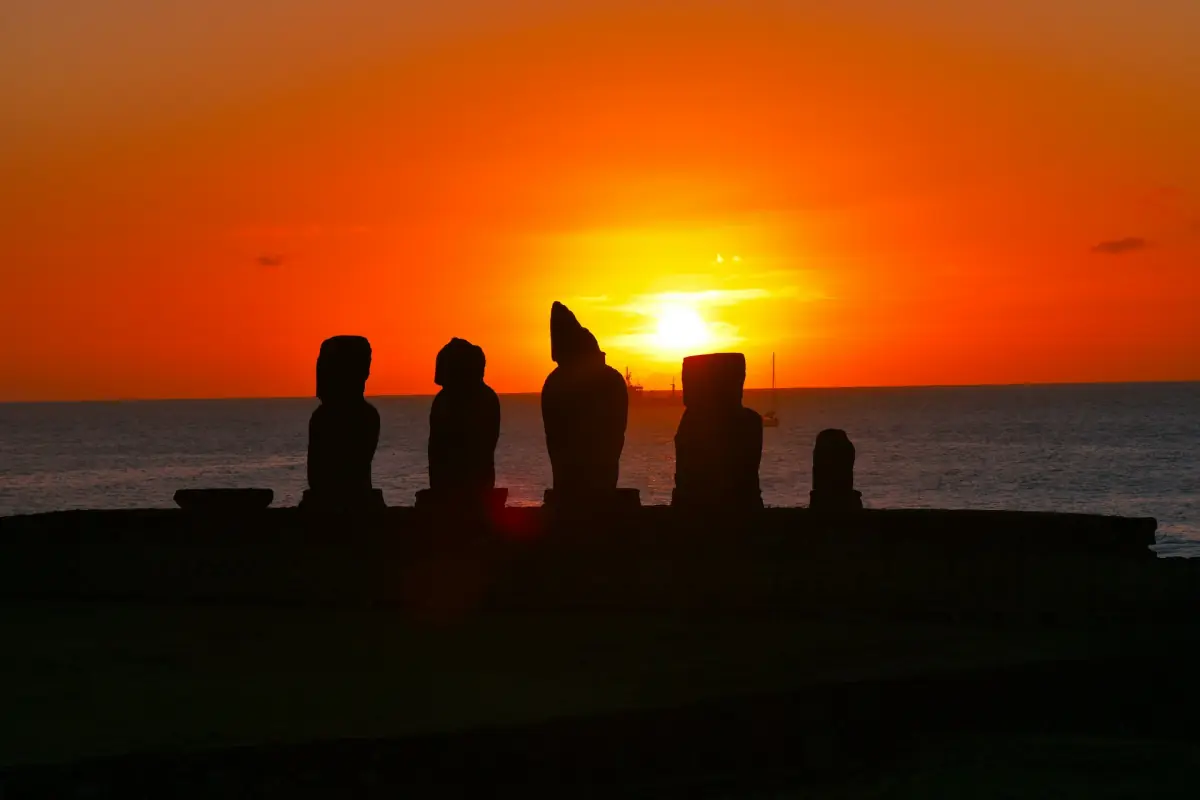
This Tongariki sunrise outing includes rain equipment for changeable weather.
Hand-picked tours, booked through Viator. Prices are indicative starting prices in US dollars (as of November 2026). Tap a tour for live availability and the current price in your currency.
Sunrise outing with rain equipment
A Tongariki sunrise excursion includes transport, a guide and rain equipment for an outdoor start to the day.
Wind clearance and the daily forecast
Local access decisions matter particularly at the Rano Kau crater edge. Wind checks can lead to a short-notice closure at Orongo. The park administration distinguishes open, caution and temporarily closed conditions; rain, slippery or muddy paths and poor visibility can affect those decisions. A caution status is not the same as a closure. Read the current notice for the intended site before setting out.
Treat the forecast as a practical part of the route rather than a reason to leave the marked path. At Rano Kau, respect viewpoint limits and do not sit on or lean against safety railings. A view of the crater lagoon is not permission to descend or swim. The Orongo and Rano Kau guide explains the setting; follow on-site directions when conditions change.
Packing for sun, showers and exposed sites
Carry water and UV protection for Rano Raraku and Tongariki, and choose sturdy walking footwear for the quarry. Keep rain protection available instead of relying on a dry-looking monthly average. Avoid using a short shower as a reason to cross a closed boundary or seek shelter against a monument. Moai and platforms must not be touched or climbed, whatever the weather.
The sunrise excursion shown here lasts 120 to 180 minutes and includes transport, a guide, trekking poles, rain equipment and mountain equipment. Those inclusions help describe the outing; they do not promise clear skies or establish a separate hiking route. For the location itself, see Ahu Tongariki. Keep the outdoor experience and the view of sunrise as separate expectations.
Weather questions
Is February a rain-free month?
February has the lowest mean monthly rainfall in this normal series, but the value is still rainfall. Bring rain protection and use a current forecast for the days of the visit. Use a daily forecast to assess the timing of showers.
Do the air temperatures show whether the sea will be warm?
These are air measurements at Mataveri. They should not be used as water temperatures or as a forecast of swimming or diving conditions. Organise sea activities around the conditions and participation requirements of the actual outing.
Can wind affect a planned Orongo visit?
Wind clearance at the crater edge can lead to a short-notice closure. Check the local status and follow the staff instructions. A booked activity and a climate table serve different purposes from the daily access decision.