Choosing an Easter Island volcano tour
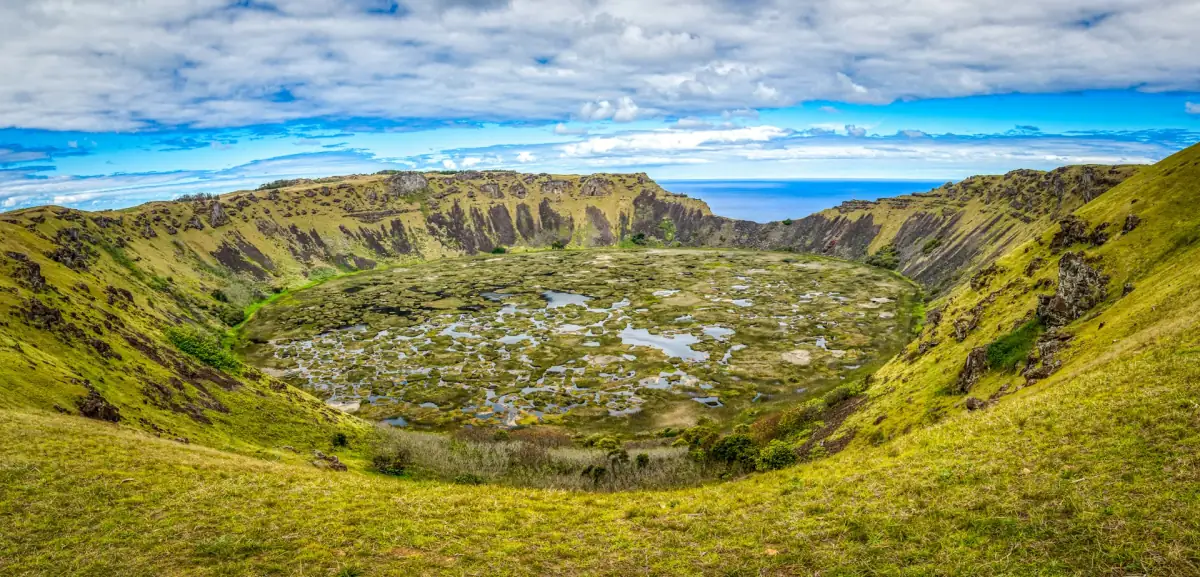
An Easter Island volcano tour to Rano Kau combines a crater landscape with the ceremonial village of Orongo. Rano Kau lies in the southwest near Hanga Roa; Orongo belongs to the history of Make-Make and the Tangata Manu ceremony. The attraction is the relationship between landscape and culture, so allow time for both the viewpoint and the village rather than treating the stop as a quick photograph.
The main decision is how much of the island to include. Three-hour outings focus on this part of Rapa Nui, while a two-day package links Orongo and Rano Kau with other archaeological sites. For a broader comparison, use the island tour guide; for the background to the ceremonial landscape, continue to Rapa Nui history.

Orongo and Rano Kau visits
Choose a guided half-day visit or the small-group outing with shared transport. The two-day package includes Orongo and other island sites.
Hand-picked tours, booked through GetYourGuide and Viator. Prices are indicative starting prices in US dollars (as of November 2026). Tap a tour for live availability and the current price in your currency.

Two-day island sites package
- Certified local guide
- Shared transport
- Visit to Orongo Ceremonial Village
The package also lists Rano Kau and other island sites. Confirm pickup and park ticket arrangements.
Check availability →
Orongo and Rano Kau guided visit
- Hotel pick-up and drop off
- Guided tour in English and Spanish
Confirm pickup arrangements. Park ticket extra; cruise port pickup is not included.
Check availability →
Orongo, Vinapu and Rano Kau
- Local guide
- Shared transportation
- Visit to Orongo Village
Confirm the pickup address and time. Site admission ticket extra.
Check availability →Orongo and Rano Kau guided visits
Compare three-hour outings with hotel pickup against a two-day programme combining the ceremonial village, crater viewpoint and other island sites.
Half-day visits or a two-day programme
The three-hour Birdman ceremonial route includes hotel pickup and drop-off and a guided tour in English and Spanish. National park admission is extra, and cruise-shore pickup is excluded. This is a useful format when the village and crater are the main purpose of the outing and the rest of the stay already has its own plans.
The three-hour Orongo, Vinapu and Rano Kau outing includes hotel pickup, a local guide and shared small-group transport during the activity. Its visits include Vinapu as well as Orongo and Rano Kau. Meals and admission to the island's visitor sites are excluded. Choose it for that combination of stops and the shared transport format, rather than expecting every half-day route to follow the same programme.
The two-day island package includes a certified local guide, shared transport, accommodation pickup and drop-off and a photographic record. Orongo ceremonial village and the Rano Kau crater viewpoint are explicit visits, alongside places including Ahu Akivi, Puna Pau, Tongariki, Rano Raraku and Anakena. Reserve two days in the itinerary for this package; it is a broader island circuit, with a different time commitment from a three-hour excursion. Agree the departure arrangements using the booking information.
Orongo and the Tangata Manu tradition
Stone buildings and petroglyphs place Orongo within a ceremonial landscape. The historical Tangata Manu practice involved obtaining the first manutara egg from Motu Nui. A guide can help keep the village's setting and ceremonial role together in the visit. Read the story as history: the journey for the egg is not an activity for visitors to recreate.
Rapa Nui is also a living culture. The village should be approached as cultural heritage, with the same respect given to the island's moai and ahu. Stay on released paths, observe the boundaries and leave stones and other objects where they are. The national park guide explains the wider ticket and protection rules before the excursion.
Rano Kau and its crater lagoon
The lagoon is part of the volcanic landscape viewed from authorised areas. Plan around the viewpoint and marked paths; a visible trail or body of water is not permission to descend into the crater, swim or climb. Follow viewpoint boundaries, and neither sit on nor lean against safety railings.
The village terrain includes uneven surfaces and slopes, and strong wind matters at the crater rim. The wind assessment can lead to a temporary closure. Follow the day's access decision rather than relying on a photograph or an earlier visitor's route. A flexible place in the itinerary helps when conditions affect access.
Ticket, guide and paths
Buy the national park ticket and arrange a guide accredited by Ma’u Henua as separate parts of the visit. The administration links its official sales platform from its park website. Orongo is limited to one visit per ticket, so coordinate this stop with any other booked route that includes the village. Use the ticket conditions to organise its validity period.
Keep photography within the same visitor boundaries as the walk. Drones and commercial filming require permission. The park prohibits fire, camping, pets, alcohol and tobacco; do not touch or climb moai or ahu. Transport to the area, whether included in a tour or arranged separately, does not change those protection rules.
Questions about Orongo and Rano Kau
How long are the guided outings?
The two half-day options each last three hours. The wider island package takes two days and includes Orongo and the Rano Kau viewpoint among its visits.
Can Orongo be visited twice with one park ticket?
Orongo allows one visit per ticket. Coordinate routes that include it so the same stop is not planned twice.
Can the crater lagoon be used for swimming?
Plan a viewpoint visit and follow the marked paths and boundaries. Do not treat the lagoon as a swimming stop or descend into unreleased areas.
What happens in strong wind?
The assessment at the crater rim can lead to temporary closure. Follow the current access instructions and allow room to adjust the day's route.